
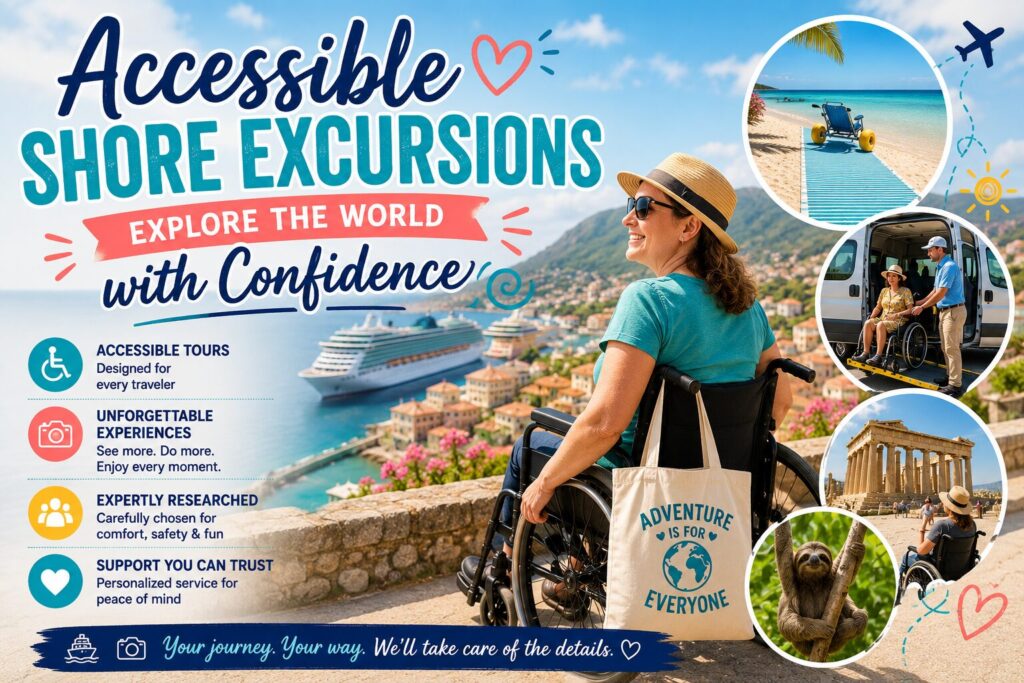
One of the greatest joys of traveling is experiencing destinations beyond your hotel or cruise ship. Whether you’re wandering through historic cities, relaxing on a tropical beach, or taking in breathtaking mountain views, the right excursion can become the highlight of your vacation.
For travelers with mobility challenges, however, choosing the right excursion requires more than simply selecting the most popular tour.
As a travel advisor who specializes in accessible travel, I spend countless hours researching excursions, speaking with tour operators, and verifying accessibility details before recommending experiences to my clients. My goal is simple: help you enjoy every destination with confidence, comfort, and peace of mind.
The good news? Accessible travel opportunities continue to improve around the world. With a little planning, you can enjoy incredible adventures that fit your mobility needs and travel style.
Why Accessibility Varies from One Excursion to Another
Many travelers assume that if a cruise ship or resort is accessible, every excursion will be too. Unfortunately, that’s not always the case.
Accessibility depends on several factors, including:
- Local infrastructure
- Transportation options
- Terrain and walking surfaces
- Historic preservation restrictions
- Weather conditions
- Availability of accessible restrooms
- Tour operator equipment and staff training
Even within the same destination, two similar excursions may offer very different levels of accessibility.
What I Research Before Recommending an Excursion
When helping clients choose excursions, I don’t rely solely on marketing descriptions. I research the details that can make or break the experience.
Some of the questions I ask include:
Transportation
- Is the vehicle wheelchair accessible?
- Is there a lift or ramp?
- Can mobility scooters be accommodated?
- Are transfer requirements involved?
Walking Distance
- How far will guests travel on foot?
- Are there opportunities to rest?
- Is there seating available throughout the tour?
Terrain
- Smooth sidewalks
- Cobblestone streets
- Gravel paths
- Sand
- Steep inclines
- Uneven surfaces
Understanding the terrain helps travelers decide whether a tour is the right fit for their mobility level.
Beach Excursions Can Be Accessible Too
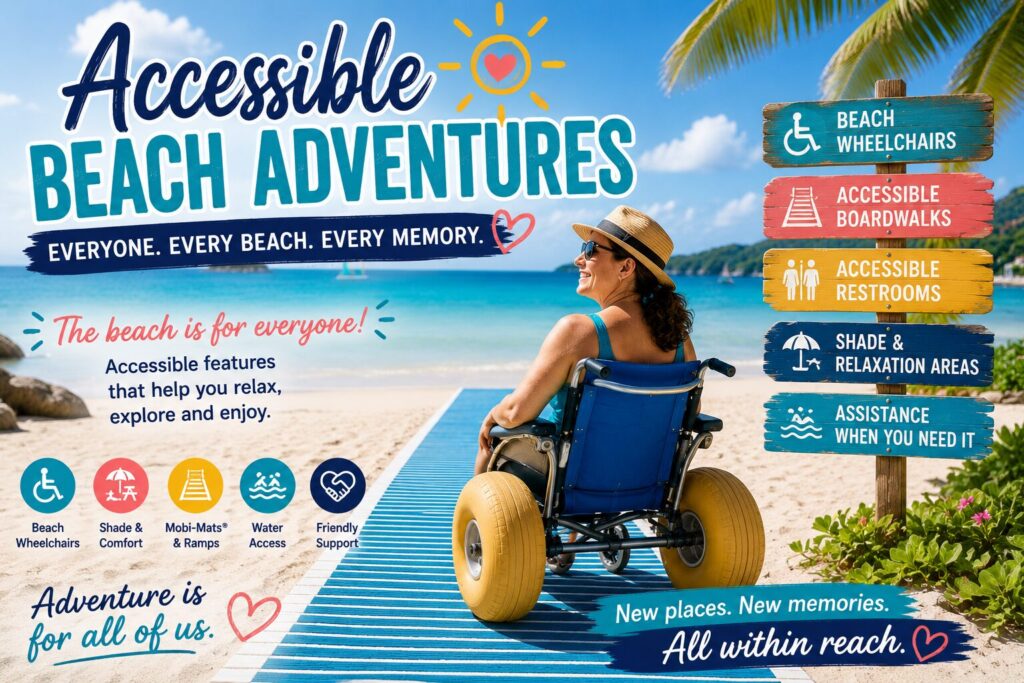
Many beach destinations now offer features that make enjoying the shoreline easier than ever.
Look for excursions that include:
- Beach wheelchairs
- Mobi-Mats
- Accessible boardwalks
- Beach ramps
- Accessible restrooms
- Shade areas
- Transfer assistance
Some beaches even provide floating wheelchairs, allowing guests to enjoy the water safely with assistance.
Wildlife and Nature Experiences
Accessible travel isn’t limited to cities and beaches.
Many destinations now offer:
- Wildlife parks with paved pathways
- Accessible boat tours
- Scenic tram rides
- Aquarium visits
- Botanical gardens
- National parks with accessible visitor centers and overlooks
These experiences allow travelers to enjoy nature without navigating difficult terrain.
Cultural and Historical Tours
Historic cities can present unique accessibility challenges, but many still offer excellent options.
I often look for tours that include:
- Accessible transportation between attractions
- Limited walking distances
- Elevators where available
- Accessible museums
- Scenic viewpoints
- Flexible itineraries
Sometimes a private tour can provide a much better experience than a large group excursion because it allows for a customized pace and route.
Cruise Shore Excursions
Cruise vacations open the door to incredible destinations, but each port is different.
Before recommending a cruise excursion, I research:
- Whether the ship docks or tenders
- Distance from the pier
- Local transportation
- Wheelchair-accessible vehicles
- Tour duration
- Accessible restroom availability
- Medical facilities nearby if needed
Ports with tender service may not always be suitable for travelers using wheelchairs or scooters, making advance planning especially important.
Don’t Be Afraid to Ask Questions
One of the best travel tips I can offer is this:
Ask questions before you book.
A few extra minutes of research can prevent disappointment later.
Some important questions include:
- Can my wheelchair or scooter stay with me throughout the tour?
- Are service animals permitted?
- Are there stairs?
- Are accessible restrooms available?
- Is there shade during outdoor activities?
- What happens if I need assistance during the excursion?
The more information you have, the more enjoyable your experience will be.
Why Working with a Travel Advisor Matters
Researching accessible excursions takes time, experience, and attention to detail.
When I plan vacations for my clients, I help:
- Compare excursion options.
- Verify accessibility with suppliers.
- Match tours to individual mobility needs.
- Coordinate special requests.
- Recommend destinations with strong accessibility infrastructure.
- Help avoid common travel challenges before they happen.
Instead of spending hours trying to interpret vague descriptions online, you have someone advocating for your needs before you ever leave home.
Final Thoughts
Accessible travel is no longer about finding the few places you can visit—it’s about discovering the many incredible experiences that are available to you.
Whether you’re dreaming of exploring ancient ruins, relaxing on a tropical beach, taking a scenic wildlife tour, or cruising through breathtaking destinations, there’s an accessible excursion waiting for you.
The key is choosing experiences that fit your abilities, comfort level, and travel goals.
If you’re ready to plan your next accessible adventure, I’d love to help you find excursions that let you experience the world with confidence, comfort, and unforgettable memories.